

More Australians say they would prefer to die at home, with an increasing number of patients moving away from hospital-based palliative and end-of-life care to community-based care.
GPs play a pivotal role in caring for patients who wish to die at home and their families. To support GPs in increasing their confidence in delivering community-based palliative care, caring@home has developed two new, free education activities.
End-of-Life Care Education Hub
A new dedicated platform for GP education provides access to high-quality, evidence-based CPD-accredited learning activities.
The End-of-life Care Education Hub currently hosts the End-of-life planning mini audit and FastTrack CPD activities.
New practical tools and resources developed by caring@home and the Quality Use of Community Palliative Care Medicines projects will be hosted on the Hub in the future.
End-of-life planning mini audit
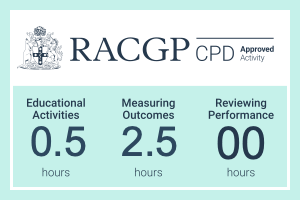
GPs can review their care of those with a life-limiting illness with this structured clinical audit.
This course guides users through a meaningful assessment of their management approach for three current or past patients, applying the Prompts for End-of-Life Planning (PELP) Framework and evidence-based guidelines for end-of-life care.
This mini audit for end-of-life planning will empower GPs to:
- Confidently recognise patients who may benefit from end-of-life planning, ensuring timely and appropriate conversations
- Strengthen the quality and clarity of end-of-life discussion documentation to support coordinated care
- Apply the PELP Framework to review and enhance care planning at key phases
- Reflect on current approaches and implement improvements aligned with best-practice standards.
FastTrack CPD
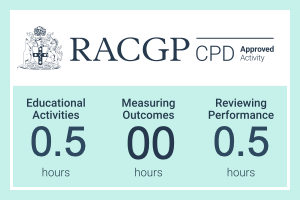
Four core medicines can be used to manage common terminal care symptoms. It is important for GPs caring for home-based palliative care patients to know the drugs available and how to use them, as well as the relevant legal constraints and protections, such as the doctrine of double effect.
FastTrack CPD Activity 1
Terminal care: management of pain and respiratory secretions
Featuring morphine, used to manage pain and dyspnoea, and hyoscine butylbromide for noisy respiratory secretions (‘the death rattle’).
FastTrack CPD Activity 2
Terminal care: management of anxiety and emesis
Featuring clonazepam, used to manage anxiety, and haloperidol, used for emesis.
These activities are formally accredited with the Royal Australian College of General Practitioners (RACGP) and the Australian College of Rural and Remote Medicine (ACRRM).
They have been designed in partnership with Medcast, a major provider of quality CPD with the RACGP CPD program.